
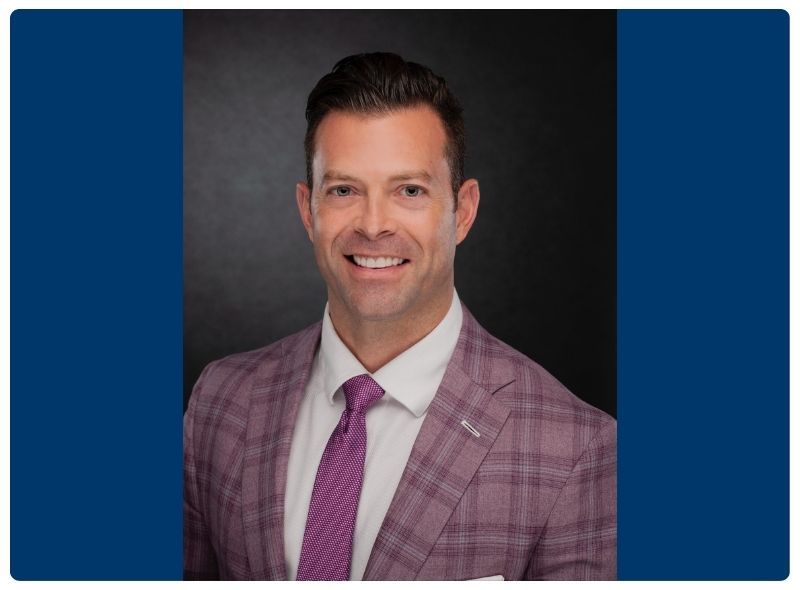
By Wesley Stanley
Director of Business Development for Texas and Arizona
The true measure of a transit system is not the number of miles it covers, but the opportunities it creates and the lives it connects.
Infrastructure That Expands Opportunity
Every day, transit connects people with the places and opportunities that shape their lives. It provides access to jobs and education, supports essential needs and strengthens the communities it serves. Transit is therefore more than a transportation conversation. It is an economic, social and community investment that influences the quality of life for millions of Americans.
The most successful projects are ultimately defined by how effectively they serve the people who rely on them. That’s why at FlatironDragados, we view our role as extending beyond construction. We partner with clients to deliver transportation solutions that create lasting value for current and future generations.
That responsibility is especially important because transit construction rarely occurs in a simple environment. It takes place within active cities, operating rail corridors, airports, constrained rights-of-way, and neighborhoods where access must be maintained. Success requires a contractor that understands the complete system, manages critical interfaces and remains attentive to the people and businesses affected by construction.
Why FlatironDragados
Transit owners need construction partners that can match the scale and complexity of their programs while remaining focused on their priorities. FlatironDragados combines a North American platform of more than 6,000 employees with broad technical resources and experience across major infrastructure markets. Our 2026 Engineering News-Record rankings, including No. 1 in Transportation and No. 1 among Domestic Heavy Contractors, reflect the depth of that organization and strength. For our clients, the greater value lies in how we apply it: mobilizing capable teams, supporting informed decisions and providing the capacity needed to advance technically demanding transit investments with confidence.
Our work across light rail, commuter and high-speed rail, bus rapid transit, airport connections, and underground and elevated systems help us understand the complete program rather than view each scope in isolation. The most consequential challenges often emerge where civil work, structures, stations, utilities, technology and operations intersect. Understanding these connections early can help owners reduce uncertainty and risk as well as align construction strategies with the mobility outcomes their communities need. That same perspective remains critical during construction, especially when work must be phased around existing service, traffic, airport operations or community access. Our teams work with owners and project partners to plan around work windows, temporary conditions, utility constraints, third-party interfaces and commissioning requirements. The objective is not simply to complete the work quickly. It is to deliver safely and predictably while maintaining access, protecting operations and supporting the client's broader program objectives.
Ultimately, that work depends on people. At FlatironDragados, our teams pair transit and major civil experience with a broader understanding of each client's mission, operational priorities and community commitments. They draw on specialized resources and lessons learned across North America, then apply that knowledge to the local context and client’s priorities. This combination turns broad capability into practical decisions and outcomes that serve both the client and the community.
Collaboration as a Delivery Capability
Project delivery is one of the most important ways those decisions and outcomes take shape. The contracting model influences how the team identifies and manages risk, assigns responsibility and creates value for the communities the transit system is intended to serve. FlatironDragados has broad experience across traditional bid-build, Construction Manager at Risk, Progressive Design-Build and Public-Private Partnerships. This range allows us to help owners evaluate the approach that best fits project maturity, funding, risk allocation, market capacity and stakeholder needs. Collaborative delivery, however, is not created by the contract alone. It requires owners, designers, builders and key stakeholders to enter the process with a shared commitment to transparency and problem-solving. When all parties embrace the spirit of the delivery model, risks can be addressed early, opportunities can be explored more openly, and decisions can remain focused on the long-term success of the program and communities it serves.
Success ultimately depends on balancing transparency with accountability. That balance keeps decisions focused on long-term program success rather than short-term project issues. When owners, designers and builders work toward shared outcomes, collaborative delivery can do more than reduce risk or improve constructability. It helps ensure transit investments remain focused on the people they are meant to serve, creating connections between communities, expanding access to opportunity, and delivering lasting value long after construction is complete.
A Partner Focused on Lasting Value
No two communities are the same, and no two transit programs face identical challenges. Selecting the right delivery model requires a clear understanding of the program's operating, funding and stakeholder environment. Throughout that evaluation, the needs of the people who will use the system must remain central.
As cities across the United States continue to grow, demand for dependable, safe and efficient mobility solutions grows with them. Changing development patterns and funding pressures require thoughtful planning, strong partnerships and sustained investment. Across rail, bus rapid transit, airport connections and emerging mobility solutions, FlatironDragados brings the technical capability and collaborative mindset to help owners move from vision to operation.
For us, transit matters because its value extends far beyond the infrastructure itself. It connects people with opportunity and supports long-term community growth. We see our role as bringing the people, scale, technical depth and delivery experience needed to protect that investment and turn it into a system the public can rely on.
The question is not whether transit creates value beyond transportation. It is how owners, designers, builders, operators and communities can work together to maximize the opportunities transit creates for the people and communities it serves.
Connect with our team at the American Public Transit Association Expo October 4-7, 2026.